Wampum Belts
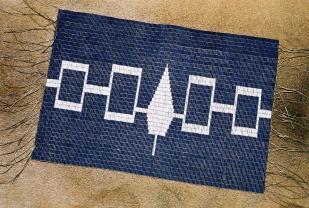
The original Wampum Belts are held by Wampum custodians at Onondaga and Six Nations of the Grand River reservations. Some belts are still in museums and some are held by private collectors. Over the years many of the belts have been stolen or, actually sold, without permission. The belts that are shown on this website are replicas and used for educational purposes at all levels.
Wampum is a small and short tubular shell bead. White beads were made from the inner whorl (columella) of the whelk, conk or quahog shell. Purple (also called black) beads could only be made from the quahog. Wampum was not used as currency by Native Americans. But, Wampum did serve as money for the colonists. In 1627 one of these merchants, Isaac De Razier of the New Netherlands colony (New York), introduced wampum into Plymouth Plantation. He brought £50 in wampum beads to Plymouth in order to purchase corn. Quickly wampum became the preferred coin substitute, as it was more portable and less susceptible to spoilage than commodity money. On November 15, 1637 the Massachusetts General Court promulgated that wampum beads would pass at 6 to a penny and were to be legal as payment in sums under 12 pence. In the same year Connecticut began accepting wampum as payment for taxes at the rate of four beads to the penny. No doubt in an attempt to standardize the value of wampum, three years later, on October 7, 1640 the General Court decided white wampum beads would pass at 4 to the penny and purple beads would pass at 2 to the penny for sums of 12 pence and below. Apparently the Connecticut legislature also fluctuated briefly revaluing white beads at six to the penny and reverting to their previous value of four to the penny. Apparently the two colonies were not able to coordinate their rates, for on June 1, 1641, eight months after lowering their rate, the Massachusetts General Court legislated wampum beads were to once again pass at 6 to the penny!
Native Americans, especially in the Iroquois Confederacy, greatly value wampum. It is used to call a council, seat council members in the correct order, speak at the council, elect a chief, depose a chief, for an adoption ceremony, during mourning, as records and deeds, to lend authority and solemnity to religious ceremonies, as gifts and as ornament. But not for money.
The Onondagas, traditional keepers of the Council Fire are also keepers of the league wampum. After the American revolution Wampum took on a new significance with the founding of the religion of Handsome Lake.
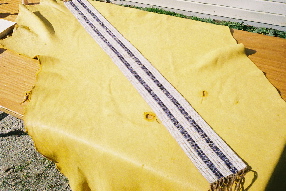
TWO ROW WAMPUM TREATY BELT
The Two Row Wampum Belt symbolizes the relationship of the native people of North America, Onkwehónwe (Mohawk), Ogwehoweh (Cayuga )
with the Whiteman, Raserónni, (Mohawk) Hahnyo:oh, (Cayuga).